
Air Source Heat Pumps
Air source heat pumps transfer heat from the outside air into your home to provide heating and, depending on the system, hot water.
How an air source heat pump works
A heat pump does not produce heat by burning fuel. It moves heat that is already present in the outside air into the property’s heating system.
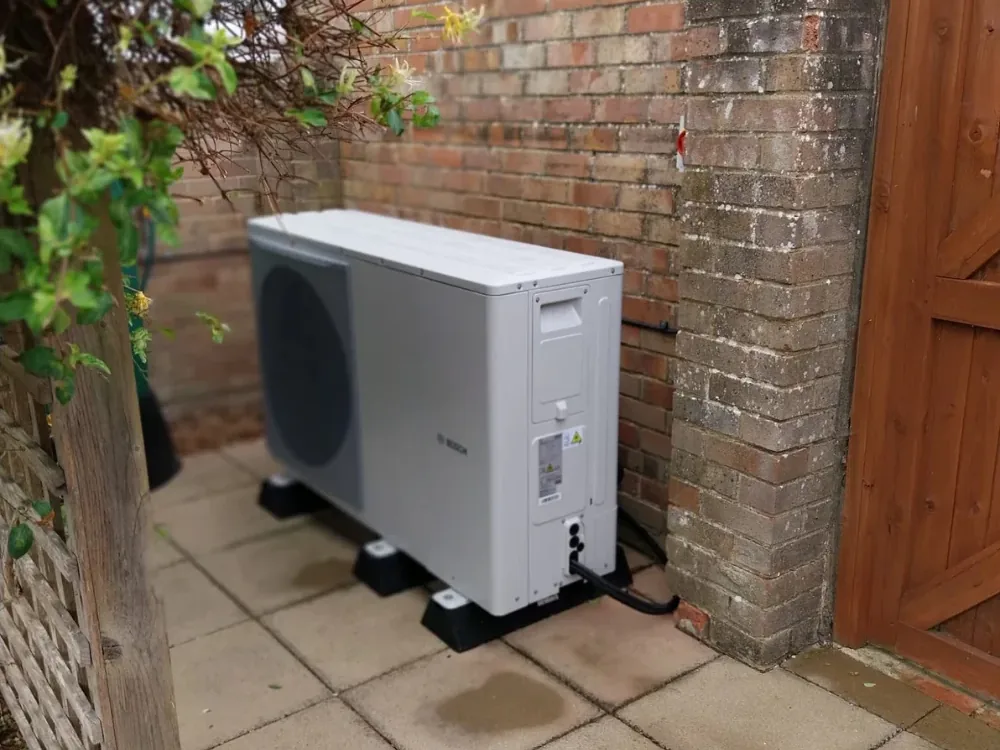
- Air is drawn in An outdoor unit draws in air from outside the property.
- Heat is absorbed A refrigerant circulating through the unit absorbs heat from that air.
- Temperature is raised A compressor raises the temperature of the refrigerant.
- Heat is transferred That heat is passed into the heating system, and to hot water where the system provides it.
A gas or oil boiler produces heat by combustion. A heat pump works differently: it transfers heat from one place to another, using electricity to drive the compressor and circulate the system rather than to generate the heat directly.
Air source systems can operate in cold outdoor conditions. How any particular system performs depends on the weather, on the property itself, and on how the system has been designed and installed.
Is an air source heat pump suitable for my home?
There is no single answer. Suitability depends on the property and on how it is currently heated.
What affects suitability
- The size of the property and how much heat it loses
- Insulation levels
- The existing radiators or underfloor heating
- The existing pipework
- Outdoor space for the external unit
- Hot water requirements
- How the home is currently heated
A property survey and heat-loss assessment are needed before the appropriate system and size can be determined.
Radiators do not automatically need to be replaced. Some homes need larger radiators, changes to pipework or other improvements to the heating system, and some do not. What is required depends on the survey and the system design that follows from it, so there is no need to work out in advance which parts of an existing system might change.
Not every property is suitable for an air source heat pump. A survey is the reliable way to establish what a particular home would need.
Designed around the property
A heat pump installation is more involved than a like-for-like boiler replacement because the heating system is designed around the property’s heat demand.
What the design depends on
- Correct sizing for the property
- The heat-loss assessment
- Whether the existing radiators or underfloor heating suit the system
- The water temperatures the system is designed to run at
- Heating controls
- Where the outdoor unit can be sited
- The wider condition of the property
These factors affect one another. Sizing a system without a heat-loss assessment, or pairing it with emitters that do not suit the design water temperature, will affect how the finished system performs.
Improving insulation is sometimes recommended before or alongside a heat pump, because the system is designed around how much heat the property loses. Whether that applies to a particular home is a matter for the survey rather than a general rule.
Government support
The Boiler Upgrade Scheme provides government support towards eligible heat pump installations in England and Wales. Grant values and eligibility conditions can change, so see our Funding & schemes page for the current position.
Eligibility is determined under the scheme rules, and registering your interest with NOVO is not a grant application.
Interested in an air source heat pump?
Register your interest and tell us a little about what you’re considering.
Register your interest